Being a crucial device for monitoring patients medically, the Patient Monitor offers a simultaneous ECG and vital signs display for patient evaluation. The apparatus aids in the acquisition of stable signals and the depiction of clear waveforms, which enable the medical personnel to keep track of the physiological trends very effectively. Its usage is not limited to one department only, but rather, it is found throughout the hospital where continuous monitoring and data review are done consistently during diagnosis, treatment, and recovery.
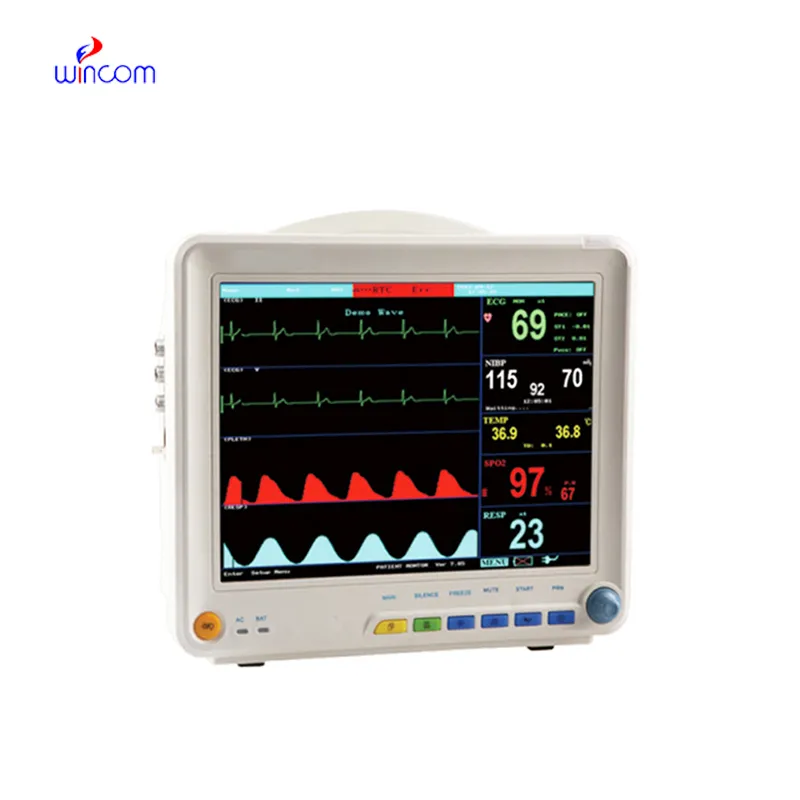
Inpatient situations in common hospital departments, Patient Monitor serves the purpose of prolonged patient observation for the duration of the stay. Long-term hospitalization is accompanied by the monitoring of Continuous ECG which aids in the identification of rhythm abnormalities. This application makes the manual checks less and at the same time, it increases the efficiency of the monitoring system. Their use facilitates the maintenance of stable patients throughout the different shifts of their care.

In future, Patient Monitor designs are anticipated to prioritize very stable signals even in the most complicated hospital environments. The ability to resist electromagnetic interference and motion artifacts to a great extent will make accurate monitoring possible even in crowded places like wards and laboratories. All these innovations will make ECG interpretation to a certain extent, patient movement will not affect the reliability of the interpretation in diverse clinical scenarios and medical departments thus, enhancing the overall reliability.
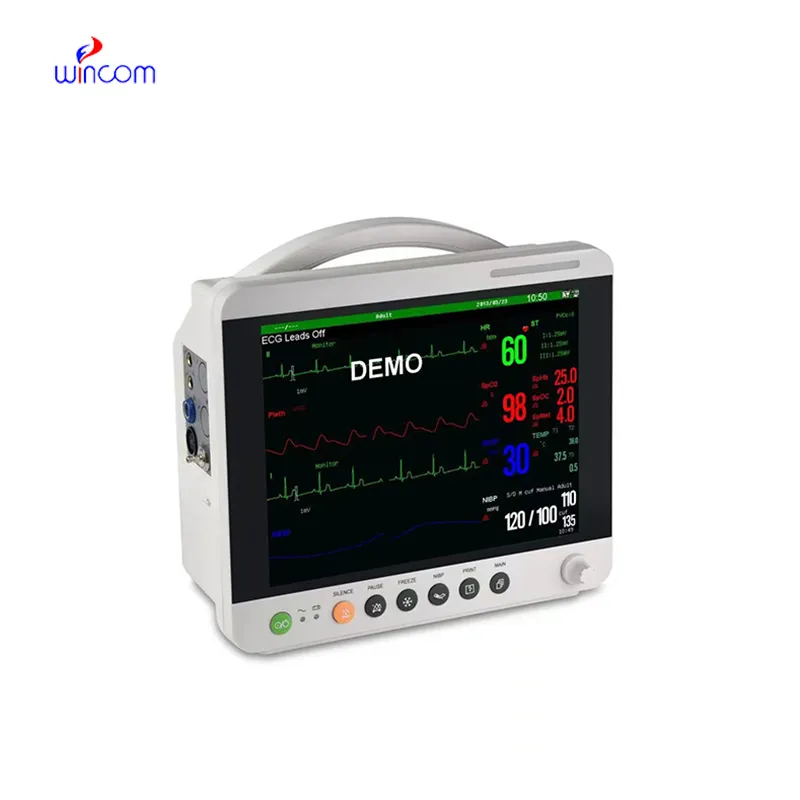
To prevent cross-contamination in hospital laboratories, Patient Monitor are to be cleaned and sterilized after every single patient use. The detection of possible signal loss is done through the regular inspection of ECG sensors, cable insulations, and connectors. Hospital information systems' compatibility is ensured by the regular update of monitoring device software. The reliability of monitoring in critical care units and research laboratory applications is guaranteed through the validation of ECG and vital sign readings accuracy by routine performance checks.
In clinical research and laboratory-based medical studies, Patient Monitor serves as a means for physiological data collection and analysis. The ECG recording functions enable the researchers to record the heart activities under controlled conditions. This data is used for cardiovascular studies, treatment evaluation, and medical training programs. Patient Monitor is improving the reliability of research in hospital-based laboratories and academic medical centers by providing stable and accurate measurements.
Q: Can a Patient Monitor & ECG catch arrhythmias? A: Yes, the monitoring of ECG in real-time will quickly reveal the presence of irregular heartbeats. Q: Are Patient Monitor & ECG devices easy to move around? A: A lot of the models are easy to move around, so they can be used at the bedside and in mobile applications in the hospital. Q: What is the impact of environmental factors on Patient Monitor & ECG? A: The accuracy of the device can be influenced by very high or very low temperatures, strong magnetic fields, or vibrating surfaces. Q: Is it a proper outpatient clinic device? A: Yes, it is good for routine cardiovascular assessment and short-term monitoring usage. Q: A Patient Monitor & ECG can be used in research, won't it? A: Yes, it is used for physiological studies and clinical trials in hospitals and laboratories.
The delivery bed is well-designed and reliable. Our staff finds it simple to operate, and patients feel comfortable using it.
This x-ray machine is reliable and easy to operate. Our technicians appreciate how quickly it processes scans, saving valuable time during busy patient hours.
To protect the privacy of our buyers, only public service email domains like Gmail, Yahoo, and MSN will be displayed. Additionally, only a limited portion of the inquiry content will be shown.
Could you please provide more information about your microscope range? I’d like to know the magnif...
I’d like to inquire about your x-ray machine models. Could you provide the technical datasheet, wa...
E-mail: [email protected]
Tel: +86-731-84176622
+86-731-84136655
Address: Rm.1507,Xinsancheng Plaza. No.58, Renmin Road(E),Changsha,Hunan,China


 EN
EN
 af
af
 es
es
 ar
ar
 tr
tr
 sw
sw
 pt
pt
 th
th
 ur
ur
 bn
bn
 ne
ne
 vi
vi
 km
km
 lo
lo
 de
de
 ru
ru
 fi
fi
 nl
nl
 fa
fa
 fr
fr
 ko
ko