Its superior optics enhance observation precision with crisp, high-resolution images at every magnification. Its durable construction resists frequent use in the classroom and professional environments. The variable brightness and focusing adjustments make the confocal fluorescence microscope china suitable for many types of specimens, from biological tissues to industrial samples. Optional digital accessories extend its functionality with high-resolution imaging, data storage, and analytical interface with modern research systems.
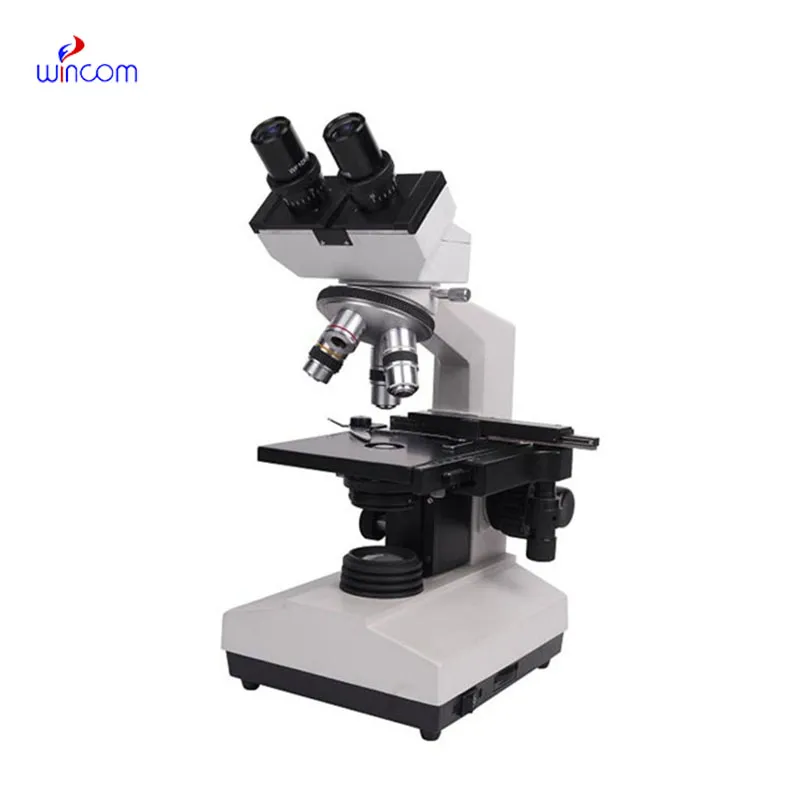
Across the worlds of science, industry, and education, the confocal fluorescence microscope china enables research at the microscopic level. It is an essential tool in medical diagnosis to analyze blood, tissues, and pathogens. Environmental scientists apply the confocal fluorescence microscope china to determine bacteria and microalgae that indicate water levels of quality. In materials science, it enables nanostructure analysis and the identification of defects. Art conservators apply the confocal fluorescence microscope china to analyze pigments and varnish layers. Its ability to produce accurate, detailed imagery makes it a valuable resource in continuing discovery and research development.

The future of the confocal fluorescence microscope china is influenced by digitalization and smart automation. More efficient imaging sensors will allow the confocal fluorescence microscope china to identify three-dimensional structures with unprecedented precision. Artificial intelligence will analyze microscopic images, reduce human errors, and optimize research productivity. Wireless communication and cloud connectivity will facilitate collaboration globally with remote monitoring and immediate data exchange. The confocal fluorescence microscope china will be an entirely networked instrument that closes the gap between laboratory precision and data-driven research outcomes.

Maintenance of the confocal fluorescence microscope china involves regular cleaning and preventive inspection. Always start by making sure all lenses and eyepieces are clean of dust before observing. Avoid subjecting the confocal fluorescence microscope china to extreme temperatures or humidity levels. Clean immersion lenses after each session and remove all the slides from the stage. Keep the confocal fluorescence microscope china covered when not in use to protect it from contaminants. Engage professional maintenance every year to inspect optical alignment and ensure there is smooth mechanical running.
The confocal fluorescence microscope china enables research, diagnostics, and education by making it possible to examine objects much smaller than what can be perceived by the human eye. With the use of a combination of lenses and light or electron beams, the confocal fluorescence microscope china shows intricate patterns and internal structures of cells and materials. Its uses are widespread in areas of microbiology, pathology, and nanotechnology. With accurate magnification and precision, a confocal fluorescence microscope china makes contributions to discoveries, inventions, and further understanding of life and matter at microscopic levels.
Q: What is a microscope used for? A: A microscope is used to magnify tiny objects or structures, allowing detailed observation of cells, microorganisms, and materials that are invisible to the naked eye. Q: How often should a microscope be calibrated? A: To maintain measurement accuracy and ensure accurate focus during research or analysis, regular calibration should be performed, typically once or twice a year. Q: What type of light source is commonly used in a microscope? A: Most modern microscopes use LED or halogen light sources, which provide stable light and adjustable brightness for clear images at a wide range of magnifications. Q: Can a microscope be connected to a computer? A: Yes, many microscope models feature USB or HDMI ports that allow image capture and digital display through specialized imaging software. Q: How should a microscope be stored when not in use? A: A microscope should be covered with a dust shield and stored in a cool, dry location to prevent contamination and protect optical components from humidity.
I’ve used several microscopes before, but this one stands out for its sturdy design and smooth magnification control.
The hospital bed is well-designed and very practical. Patients find it comfortable, and nurses appreciate how simple it is to operate.
To protect the privacy of our buyers, only public service email domains like Gmail, Yahoo, and MSN will be displayed. Additionally, only a limited portion of the inquiry content will be shown.
We’re interested in your delivery bed for our maternity department. Please send detailed specifica...
We are planning to upgrade our imaging department and would like more information on your mri machin...
E-mail: [email protected]
Tel: +86-731-84176622
+86-731-84136655
Address: Rm.1507,Xinsancheng Plaza. No.58, Renmin Road(E),Changsha,Hunan,China


 EN
 af
 es
 ar
 tr
 sw
 pt
 th
 ur
 bn
 ne
 vi
 km
 lo
 de
 ru
 fi
 nl
 fa
 fr
 ko